Chewed
Paper.
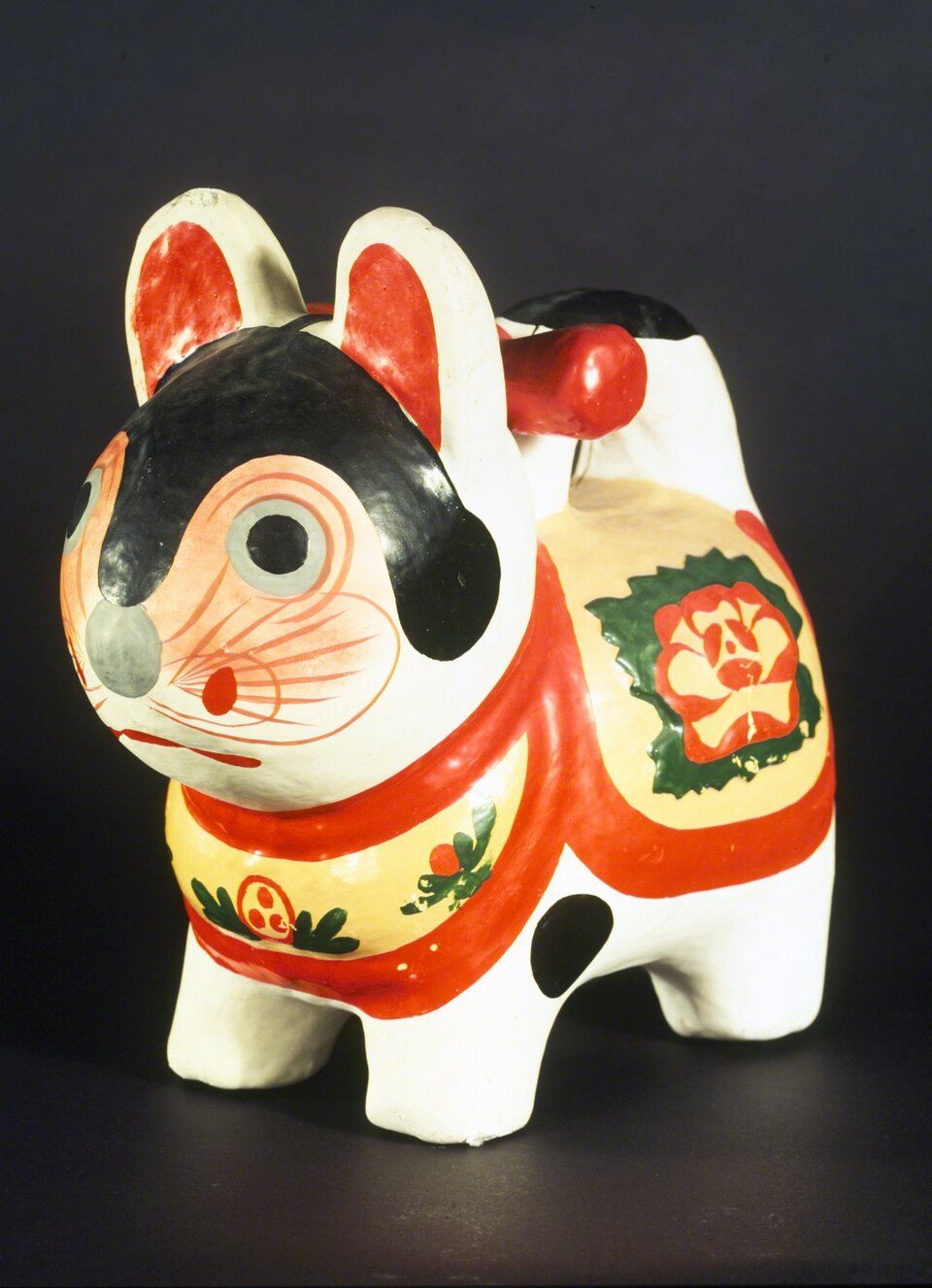
Papier-mâché is French for chewed paper. It's also how people made pen boxes for Persian scholars, anatomical horses for medical schools, a 40-ton carnival float, a dog that keeps babies safe, and a whole species of monster that came to one man in a fever. Here's how to make it, and who to follow.
You've done this. Everybody's done this. A balloon, a bowl of flour and water, a stack of torn newspaper, and a kitchen table that never fully recovered. Papier-mâché is the first sculpture most of us ever make.
Which is exactly why nobody takes it seriously, and exactly why they should. Paper soaked in paste and layered over a shape dries into something light, hard and strangely strong. People have used it to make furniture, toys, medical models, masks, giant puppets and parade floats as tall as a building.
This manual is two things. Part how-to: the real recipe, the layer count, the mistakes. Part PPO: the people who took kids' craft paste and made it into art. They're real, they're working right now, and their links are in the ledger at the end. Go follow them.
It was never just for kids
HISTORY // LAYER 1Persia and Kashmir. Long before the craft table, papier-mâché was luxury. Persian scholars carried their reed pens in a qalamdan, a slim pen box often made of papier-mâché, lacquered and painted with flowers and birds so fine they look like miniatures. In Kashmir the craft is still a living tradition, sold as boxes, bowls and ornaments.
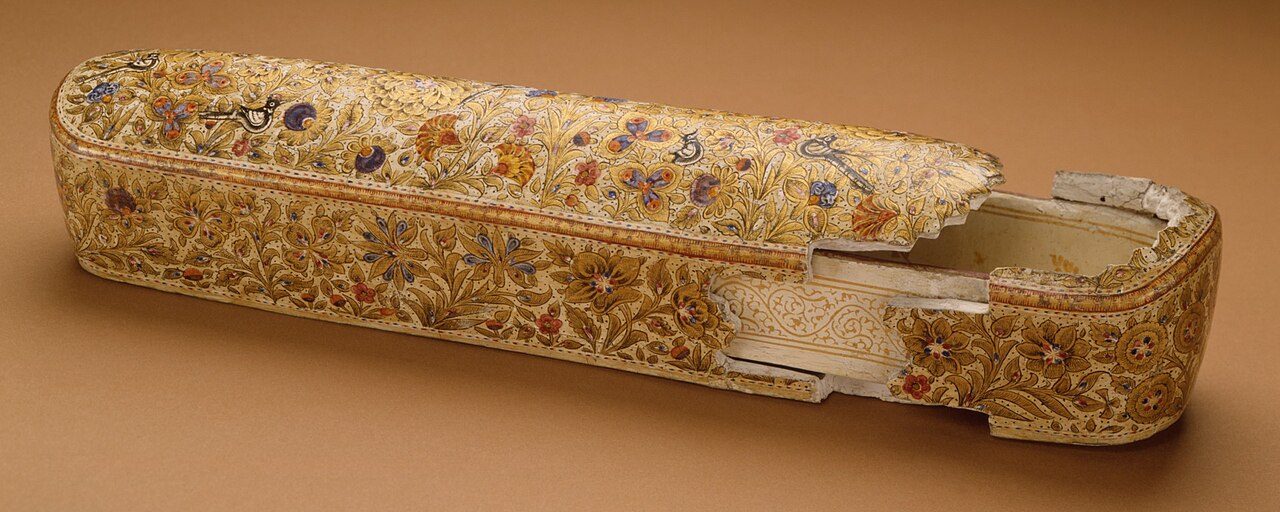 A qalamdan (pen box), lacquered papier-mâché, about 1800. LACMA.
Victorian furniture. In the 18th and 19th centuries, English workshops pressed paper into hard, smooth panels, lacquered them black and painted them with gold and mother-of-pearl. They made trays, boxes and, yes, chairs you could actually sit on.
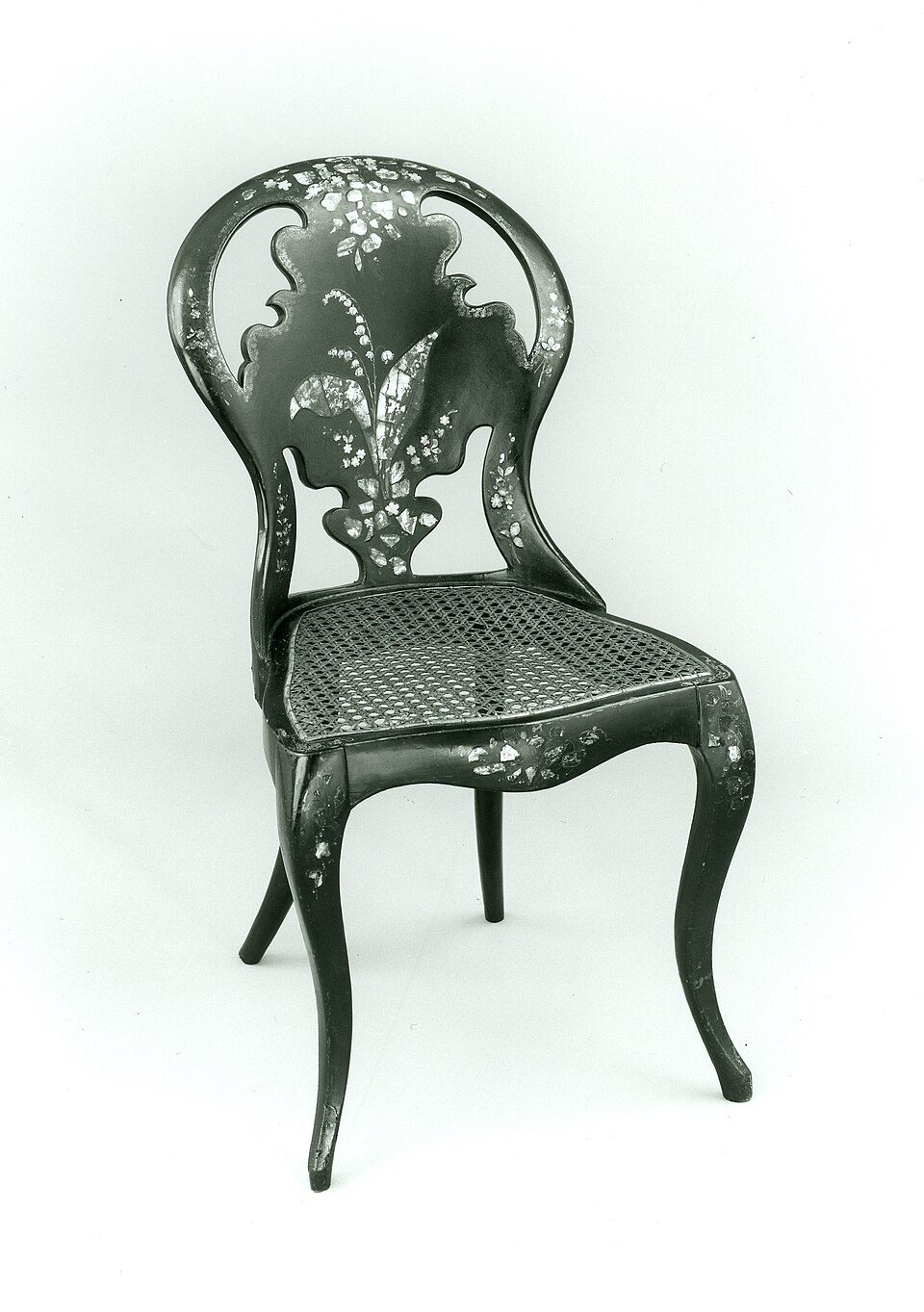 A papier-mâché side chair, about 1830. The Met.
A French doctor named Louis Auzoux had a problem: medical students needed bodies to study, and bodies were hard to get and didn't keep. So he made them out of papier-mâché. His anatomical models came apart piece by piece, every muscle and organ painted and labelled, and his workshop in Normandy shipped them to schools around the world.
He didn't stop at people. Auzoux made a life-size anatomical horse that you could take apart layer by layer, for veterinary schools. Some of them still exist in museum collections, like the one below. A horse made of paper, taught generations of vets.
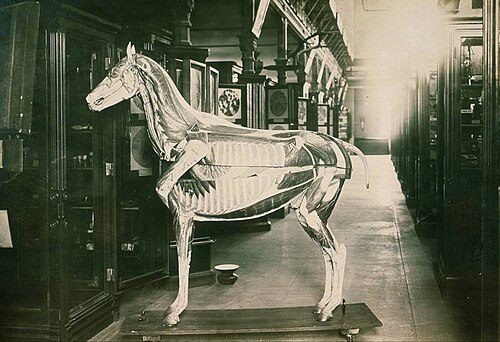 An Auzoux papier-mâché horse. National Museum of Health and Medicine, CC BY 2.0.
The monster who came in a fever
PPO // MEXICO CITY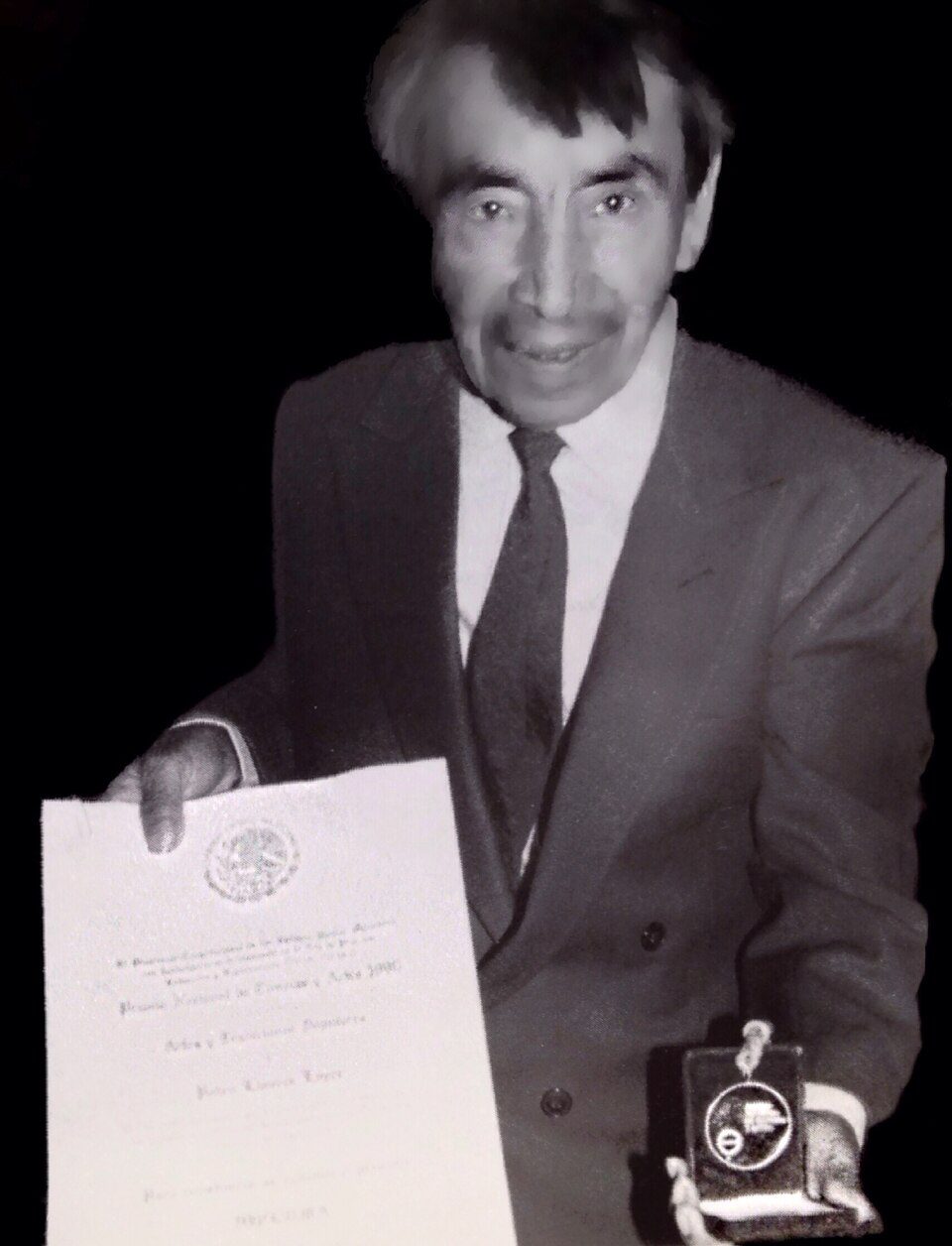 Pedro Linares López, Mexico City, 1990. Photo: Gallina x, CC BY-SA 4.0 (tinted).
Pedro Linares was born in Mexico City in 1906 into a family of cartoneros, papier-mâché makers who built piñatas, carnival masks and the Judas figures that get blown up with firecrackers at Easter.
Around 1936, the family's story goes, he fell seriously ill. In his fever he dreamed of a forest full of impossible animals, donkeys with butterfly wings, roosters with bull horns, lions with eagle heads, all shouting one word: "¡Alebrijes!" When he recovered, he started building them out of paper and paste and painting them in the loudest colours he could find.
Nobody is sure what "alebrije" means. One idea is that it came from the prayers his family whispered over him while they thought he was dying.
Here's the twist. The alebrijes most tourists bring home now are carved wood, painted in Oaxaca. That style came later, inspired by his. Mexico City's version, the original, is paper. In 2019 the city declared Pedro Linares's alebrijes part of its intangible cultural heritage. His sons and grandsons, including Leonardo Linares, still make them near the Mercado de Sonora.
Every year since 2007, Mexico City's Museo de Arte Popular has run the Desfile de Alebrijes Monumentales: a parade of papier-mâché monsters several metres tall, built by teams of cartoneros and pushed through the historic centre.
Afterwards they're lined up along Paseo de la Reforma for anyone to see, free. It's papier-mâché as a public holiday. The 2026 parade was the 18th.
Dogs, dolls and 40-ton floats
JAPAN · ITALY · VERMONTJapan: the dog that guards babies. In Japan, papier-mâché is hariko. The inu-hariko, the puppy doll on our cover, is a charm for safe childbirth and a healthy child. Dogs have big litters and easy births, so a paper dog went into the wedding set and the nursery. Japan's famous red daruma dolls are hariko too: you paint in one eye when you set a goal, and the other when you reach it.
Italy: the floats. The town of Viareggio in Tuscany runs one of Europe's biggest carnivals. In 1925 local builders started making the floats from carta a calco, papier-mâché cast in moulds over frames of wood and iron, much lighter than the plaster used before. The floats grew. Today the biggest are about 14 metres tall and weigh around 40 tons, with moving heads and arms, built all year in a purpose-built workshop complex, the Cittadella del Carnevale.
Vermont: the giant puppet barn. Bread and Puppet Theater started on New York's Lower East Side in 1963 and moved to a farm in Glover, Vermont, in 1974. Its founder, Peter Schumann, built enormous papier-mâché puppets for street protests and pageants, and handed out his own sourdough rye bread at shows. The old barn on the farm is a museum stacked floor to ceiling with puppets. Admission is free.
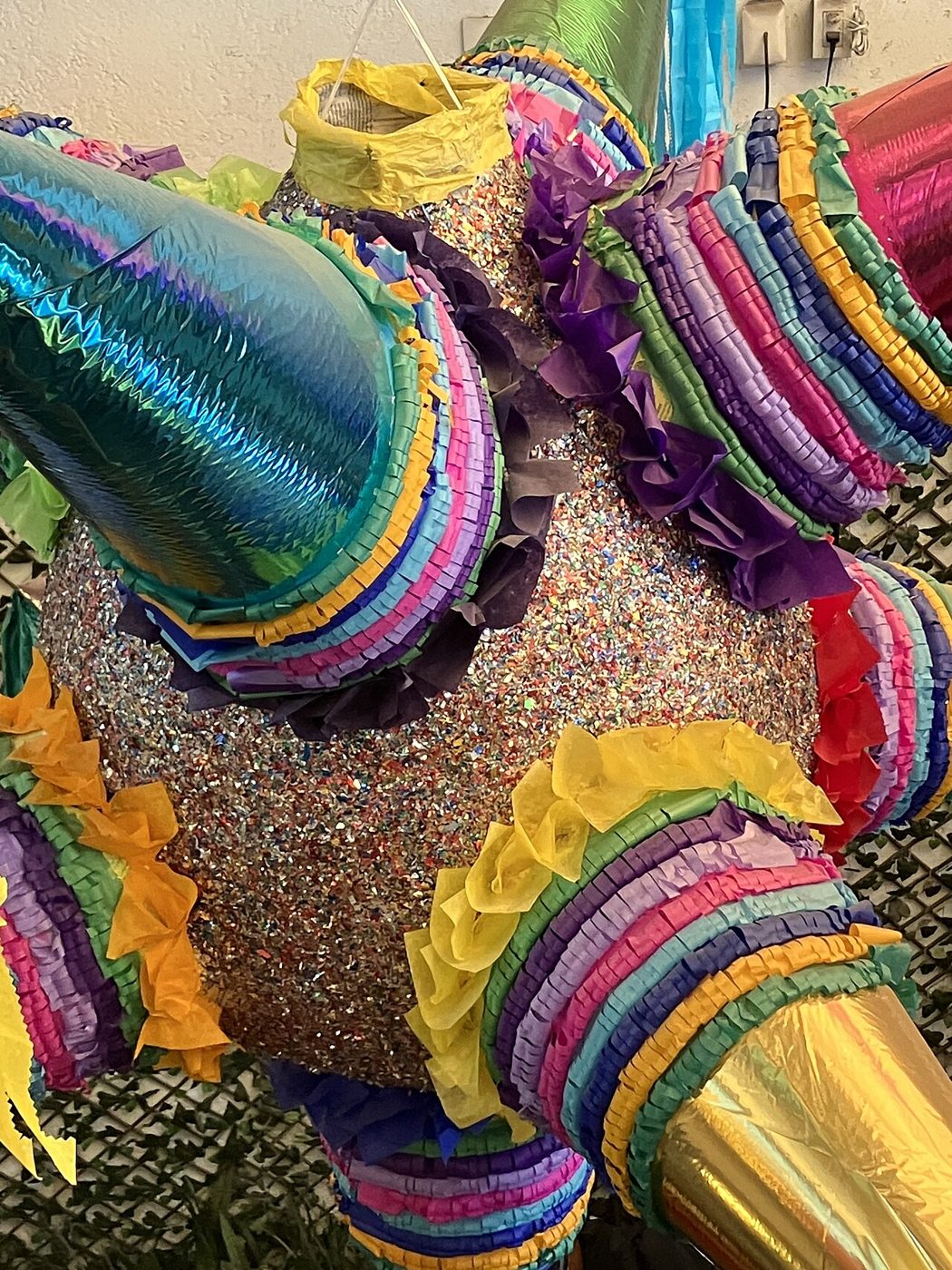 Inside a traditional piñata: paper, paste, a clay pot. Photo: Paricutina, CC BY 4.0.
People to put on
PPO // GO FOLLOW THEMWorking artists who make papier-mâché do things it shouldn't be able to do. No photos of their work here: it's theirs. Their links are in the ledger, so go look at the real thing.
Will Kurtz
NEW YORK · NEWSPAPER + TAPELife-size sculptures of ordinary New Yorkers and their dogs, made from torn newspaper and masking tape over wood and wire. He finds his subjects on the street. You can read yesterday's headlines on their faces.
Dan Reeder
SEATTLE · DRAGONS + MONSTERSDecades of papier-mâché dragons and monsters, built from balls of paper instead of a skin over a frame, with a cloth-and-glue mix for strength. He has written books on it and shares his methods for free.
Bernie Kaminski
EVERYDAY OBJECTSPhone books, boomboxes, a junk drawer, a pair of tube socks, all remade in lumpy, lovable papier-mâché in his kitchen. He started after his daughter brought one home from school.
Roberto Benavidez
LOS ANGELES · PIÑATA ARTPiñatas as fine art: shimmering birds and hybrid creatures, some based on the strange beasts of Hieronymus Bosch, covered in thin fringed strips of paper. Nobody is hitting these with a stick.
Liz Sexton
MINNEAPOLIS · ANIMAL MASKSHuge wearable masks of foxes, owls and other wild animals, made from brown paper, paste and pulp. Each one takes weeks. The point is to make you feel like the animal for a minute.
The Linares family
MEXICO CITY · ALEBRIJESPedro Linares's descendants still build alebrijes and cartonería the way he did. Grandson Leonardo Linares Vargas is the family's public voice. Buy from the source.
Bread and Puppet
GLOVER, VERMONT · GIANT PUPPETSStill running summer shows and the free puppet museum in the barn. Bring a sweater and an appetite for rye bread.
Jonni Good
ULTIMATE PAPER MACHESculptor and teacher who invented a popular paper mache clay: a smooth, mouldable paste of toilet paper, glue and a few other things, for sculpting fine detail. Her site is a free school.
How to actually build it
THE RECIPERecipe card
| Flour paste | 1 part flour to about 1 part water, whisked smooth. Thinner for strips, thicker for detail. A pinch of salt helps it keep. |
| Glue paste | White PVA glue thinned with water, about half and half. Stronger, less mouldy, more money. |
| Paper | Newspaper, torn (never cut) into strips about an inch wide. Torn edges blend; cut edges show. |
| Layers | 3 to 4 for a mask or bowl. 6 or more for anything you'll lean on. |
| Drying | Let each couple of layers dry fully, often overnight. Warm and airy, not wet and closed. |
| Finish | A coat of white primer or gesso, then paint, then a sealer if it'll be handled. |
The shape. A balloon for anything round. Crumpled newspaper and masking tape for anything else. That's what most of the pros use: a cheap, ugly skeleton called an armature. Cardboard, wire and wood for the big stuff.
The strips. Dip, then pull the strip between two fingers to squeeze off the extra paste. Too wet and it never dries. Lay each layer in a different direction, like plywood, so it doesn't split along one grain.
Tip: alternate newspaper with plain brown paper or coloured tissue on each layer, so you can see where you've already covered.
yep, that's me, with a beautiful, perfectly smooth, completely mouldy sculpture. you're probably wondering how i got here. two words: didn't dry.
The usual fails. Mould means it stayed wet too long: thinner layers, more air, more time. Soft spots mean too few layers. Wrinkles mean too much paste. A popped balloon halfway through means you forgot to let the first layers dry first. Everyone does that once.
What should you make?
WHO IT'S FORThe First-Timer
BALLOON BOWL · 4 LAYERSA bowl over half a balloon. One weekend, zero skill. Paint it something loud.
The Mask Maker
MASK · FOIL FORMShape foil or clay into a face, then layer over it. Halloween is a deadline, not a suggestion.
The Monster Builder
ALEBRIJE · WIRE + TAPETwo animals that shouldn't go together. Wire skeleton, tape muscles, paper skin, every colour you own.
The Party Animal
PIÑATA · BALLOON + FRINGEKeep the walls thin enough to break. Fringe the crepe paper. Candy is load-bearing.
The Perfectionist
PAPER MACHE CLAYYou want fine detail and smooth skin. Learn the clay, sand between coats.
The Overachiever
GIANT PUPPET · CARDBOARDYou want a 3-metre head on a pole. Call Vermont. They've done it.
tl;dr pulp
- Papier-mâché means chewed paper. Paper plus paste, in layers, dries hard.
- It was luxury before it was a kids' craft: Persian pen boxes, Victorian chairs, Auzoux's paper horses.
- Pedro Linares dreamed the first alebrijes in a fever. The originals are paper.
- Japan's inu-hariko dog protects babies. The daruma gets one eye per goal.
- Viareggio's floats stand about 14 metres tall, and the trick dates to 1925.
- Recipe: flour and water about 1:1, torn strips, 3+ layers, dry fully.
- Go follow: Will Kurtz, Dan Reeder, Bernie Kaminski, Roberto Benavidez, Liz Sexton.
- Mould means wet. Thinner layers, more air, more patience.


THE LEDGER
every hole in this manual, in one place. 12 doors. pick one. we're not responsible for where you end up.
OFFICIAL
- Will Kurtz willkurtz.comnewspaper people, life size
- Dan Reeder gourmetpapermache.comhis free how-tos, dragons included
- Bernie Kaminski instagram.comthe junk-drawer archive
- Roberto Benavidez robertobenavidez.compiñatas you will never hit
- Liz Sexton lizsexton.comwild animal masks
- Leonardo Linares feriamaestros.comthe Linares grandson's maker profile. buy from the source
- Bread and Puppet Theater breadandpuppet.orgsummer shows and the free barn museum
RABBIT HOLES
- Desfile de Alebrijes Monumentales timeoutmexico.mxTime Out México on the parade and the Reforma display
- Viareggio visittuscany.comhow the floats get built, from Tuscany's own tourism board
- inu-hariko muza-chan.neta Japan blog on the dog charm and where to buy one
READ
- Jonni Good ultimatepapermache.coma free school, plus the paper mache clay recipe
LOOK
- Louis Auzoux medicalmuseum.health.milthe National Museum of Health and Medicine, home of the paper horse
Made it to the end? You're a minion now.
New manuals drop every 13th. Get them first, read every one free, or slap a sticker somewhere to show you've been here.
found this printed somewhere? read it, then leave it somewhere weirder. field manuals are supposed to travel.