MINIONS ONLY
Who Killed
the Red Car?
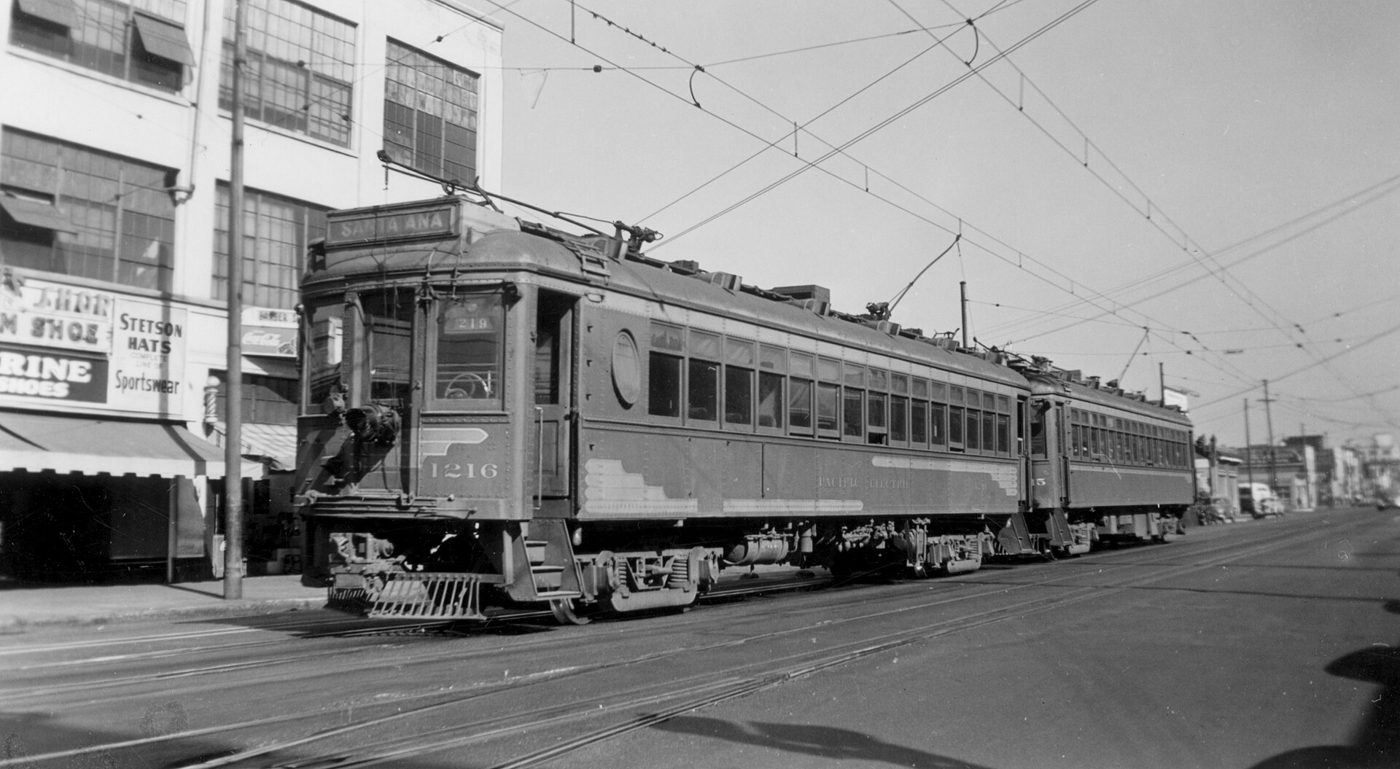 case reopened
In 1988 a cartoon movie made a whole generation believe a car company murdered Los Angeles' trains. Some of that is true. Most of it isn't. Here's the real case file, the evidence for and against, and where you can still ride the ghost.
In Who Framed Roger Rabbit, set in Los Angeles in 1947, the villain Judge Doom secretly buys the city's streetcar company, the Red Car, so he can scrap it and sell everyone a freeway. Private eye Eddie Valiant doesn't even own a car. He doesn't need one. "Who needs a car in L.A.?" he says. "We got the best public transportation system in the world."
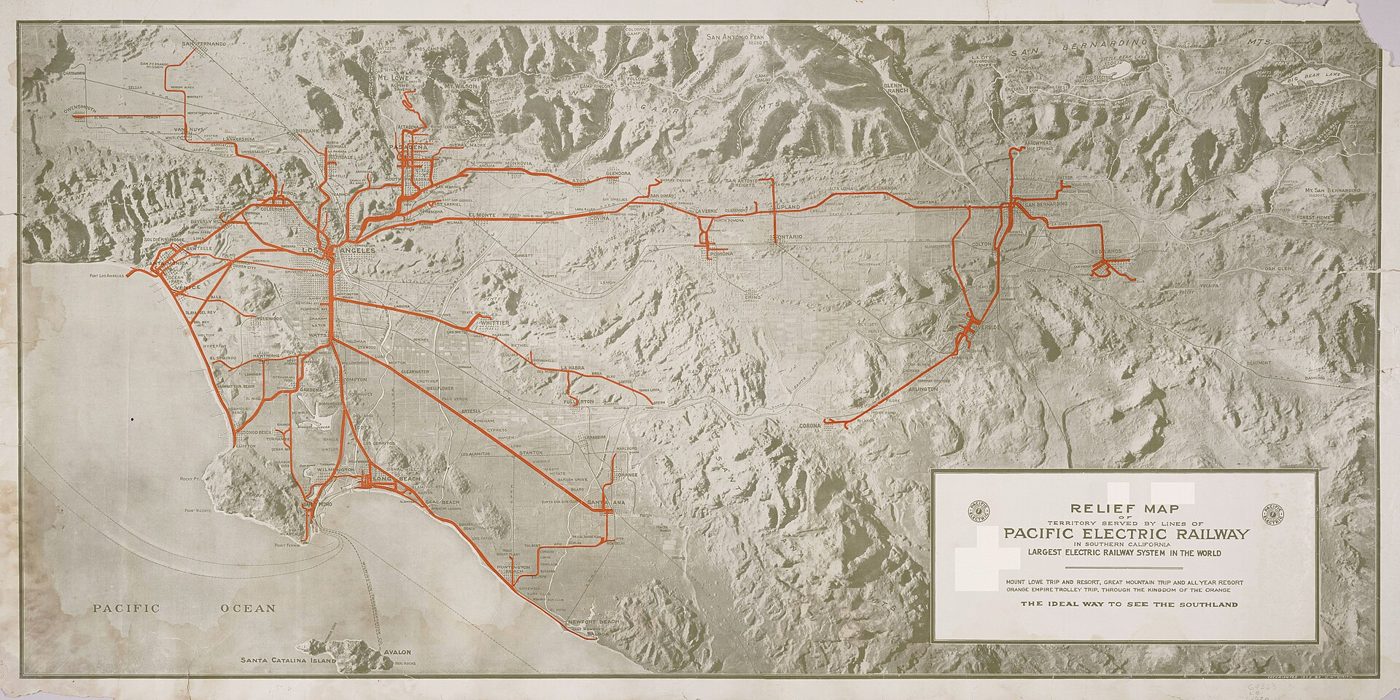
Here's the wild part: he was right. The Red Cars were real. They belonged to the Pacific Electric Railway, and for a while it was the largest electric interurban railway in America, with more than 1,000 miles of track across Southern California.
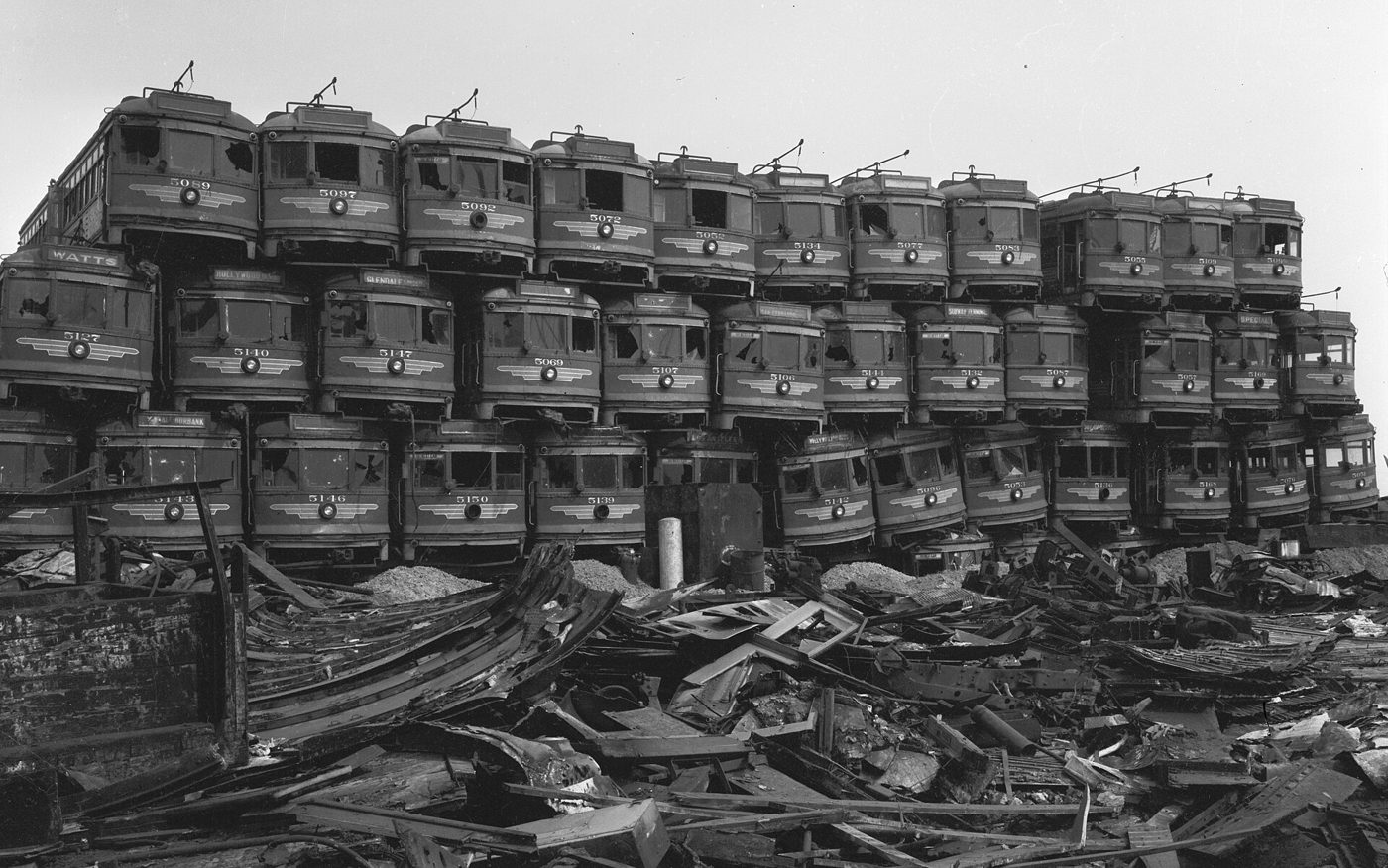
And then it disappeared. The last Red Car ran in 1961. The freeways came. For decades everyone in LA "knew" who did it, partly because a cartoon rabbit told them.
This manual reopens the case. Who actually killed the Red Car? And how did a city famous for traffic end up building trains again, some of them on the exact same tracks?
The Big Red Cars
ROUTE MAP // 1901–1961The Pacific Electric started in 1901 under Henry Huntington, a railroad heir who was also buying land all over the region. That's the part people forget: the Red Cars were a real estate machine. Huntington ran tracks out to empty land he owned, the land became a town, and the town needed his trains.
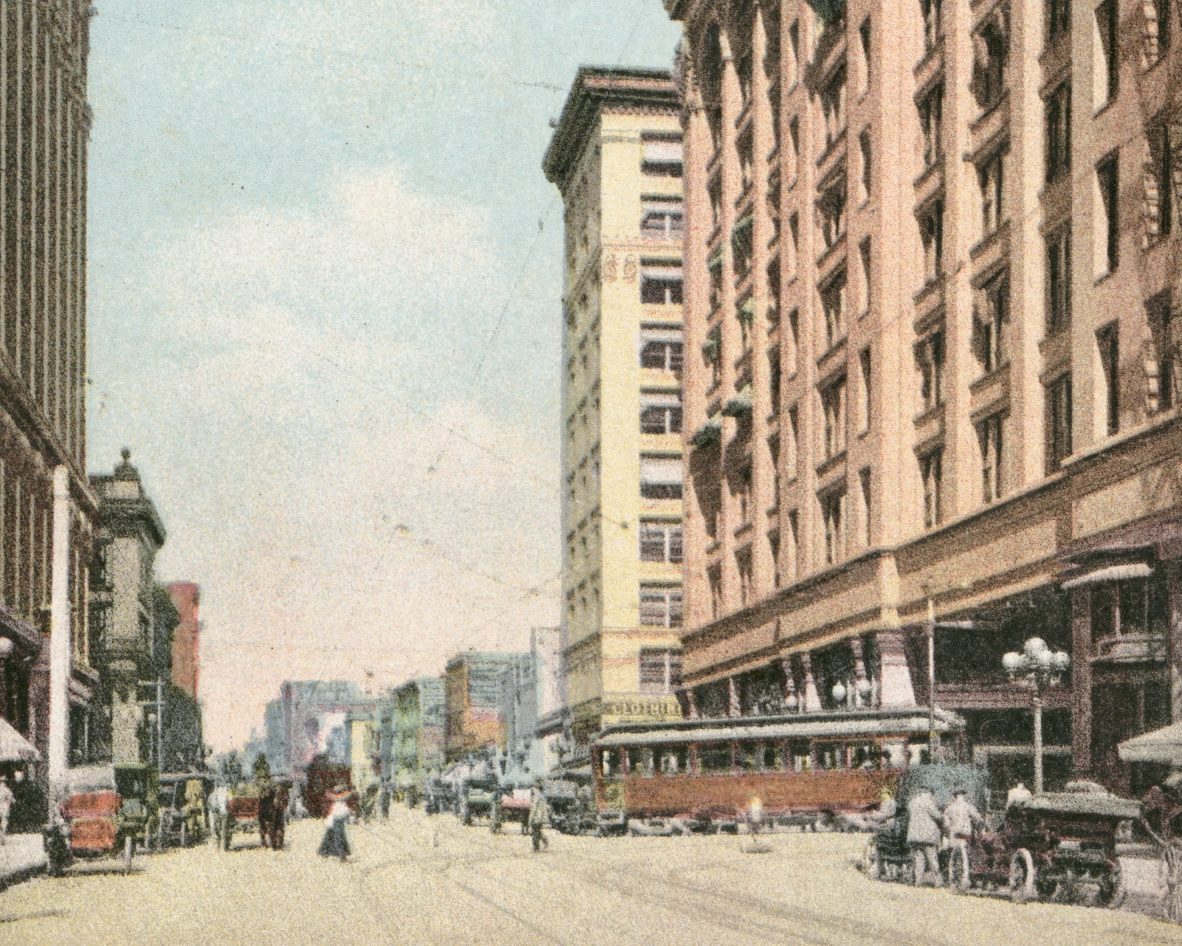
The big red interurbans ran from downtown out to Long Beach, Santa Monica, Pasadena, the San Gabriel Valley and San Bernardino. The local yellow streetcars, the Los Angeles Railway, worked the city streets. Together they made LA a rail town long before it was a freeway town.
Downtown, the Red Cars ran out of the Pacific Electric Building at 6th and Main. In 1925 they even dug a subway: a tunnel under Bunker Hill that took trains toward Hollywood and the Valley without fighting street traffic. It closed in 1955.
| YEAR | WHAT LEFT THE STATION |
|---|---|
| 1901 | Pacific Electric starts under Henry Huntington. |
| 1902 | The Long Beach line opens on July 4. It will be the last to die. |
| 1925 | The subway tunnel under Bunker Hill opens. |
| 1940 | The Arroyo Seco Parkway opens: the first freeway in the West. |
| 1949 | A federal jury convicts GM, Firestone, Standard Oil of California and others. (Section 03.) |
| 1955 | The subway tunnel closes. |
| 1961 | The last Red Car runs, on the Long Beach line, on April 9. |
| 1963 | The last yellow streetcar runs, on March 31. |
| 1990 | Light rail returns to Long Beach (Section 05). |
| 1992 | Metrolink's first trains run, on October 26. |
The movie version
FICTION // 1988Who Framed Roger Rabbit (1988) was directed by Robert Zemeckis and written by Jeffrey Price and Peter S. Seaman, loosely based on Gary K. Wolf's 1981 novel Who Censored Roger Rabbit? It's a cartoon murder mystery. Underneath it, it's a story about how LA lost its trains.
The villain, Judge Doom, owns a fake company called Cloverleaf Industries (a cloverleaf is a freeway interchange, which is the joke). His plan: buy the Red Car, shut it down, and build a freeway, so everyone in town has to drive. He describes the future as eight lanes of shimmering cement.
The film's version of history is clean: one evil company buys the trains on purpose to kill them. The real version is messier, which makes it a better story.
The evidence board
CONTESTED // READ BOTH SIDESThe theory the movie riffs on is usually called the General Motors streetcar conspiracy. Here's the board, pinned up honestly.
THE CASE FOR
- A company called National City Lines, backed by GM, Firestone, Standard Oil of California, Phillips Petroleum and Mack Trucks, bought up transit companies across the US and switched them from rails to buses.
- In 1949 a federal jury convicted those backers of conspiring to monopolize the sale of buses and supplies to the transit companies National City Lines controlled. The conviction was upheld in 1951.
- The punishment: GM was fined $5,000. GM's treasurer, H. C. Grossman, was fined one dollar.
- In LA, an NCL company bought the yellow-car Los Angeles Railway in 1945 and soon announced it would scrap most of the lines.
THE CASE AGAINST
- The same jury acquitted them of conspiring to monopolize ownership of the transit companies themselves.
- The Red Cars weren't NCL's. Pacific Electric belonged to the Southern Pacific railroad until 1953, when the passenger lines were sold to Metropolitan Coach Lines and then taken into public ownership in 1958.
- Streetcars were dying everywhere: fixed fares during inflation, the Depression, traffic, and a postwar city that wanted cars. By most accounts the Red Cars lost riders and money for years.
- One historian estimated GM's reach covered only about 10% of American transit systems.
The conspiracy became famous in 1974, when an antitrust lawyer named Bradford Snell testified to the US Senate and called GM "a sovereign economic state." Economists like George Hilton and, later, Cliff Slater pushed back hard on his version. Historians are still arguing about it.
The most quoted number from the whole affair isn't the size of the network or the cost of the freeways. It's $1: the fine paid by a GM executive in the 1949 case. For the people who believe the conspiracy, it's proof the system let them walk. For the skeptics, it's proof the court didn't think the crime was that big. Either way, it's the cheapest dollar in LA history.
Eight lanes of cement
FREEWAY // 1940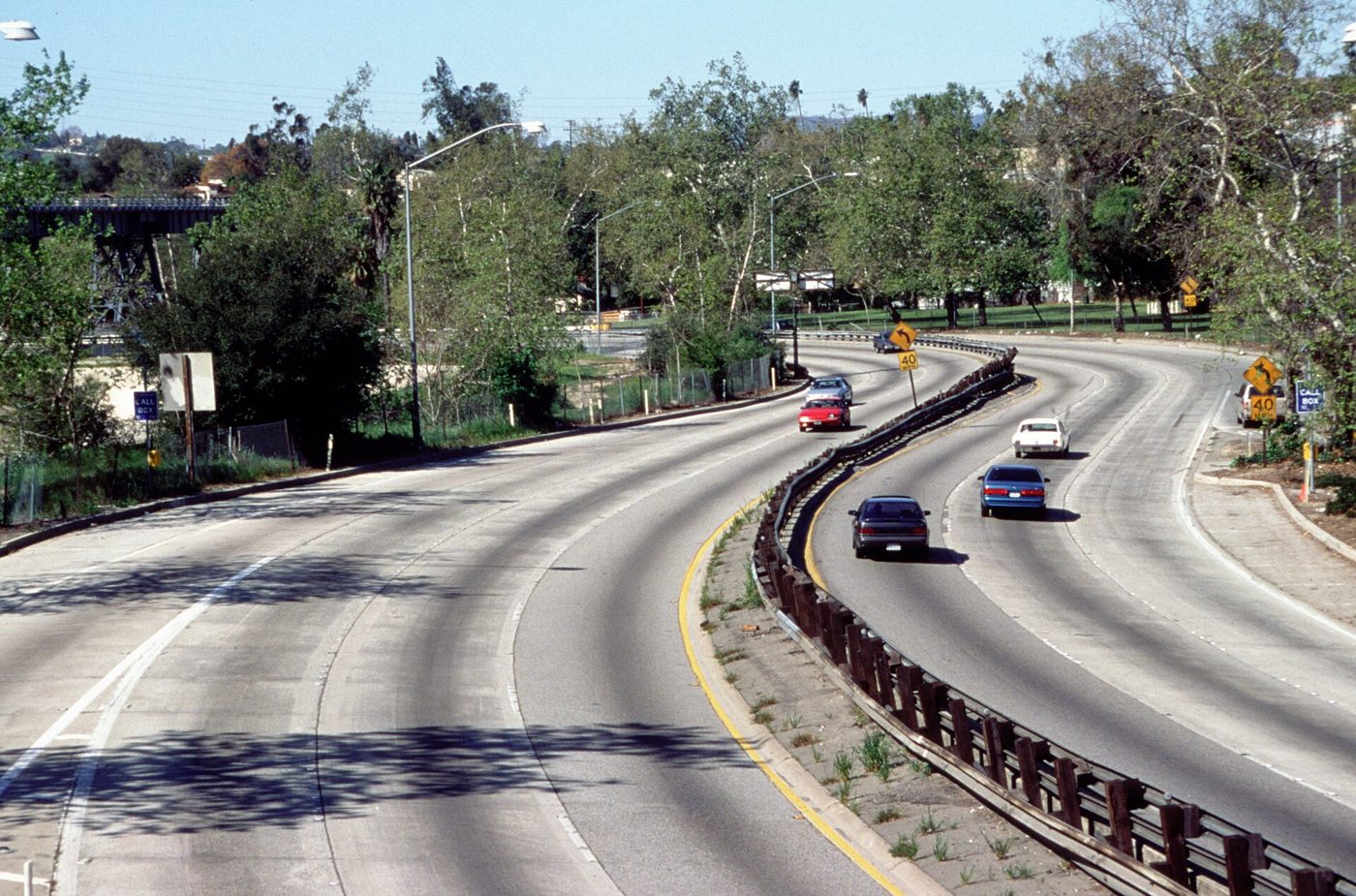
The freeway didn't need a villain. Southern California voted for it, paid for it and moved to it. The Arroyo Seco Parkway opened at the end of 1940, and after the war the region went all in on freeways, the suburbs they made possible, and the cars to drive on them.
The Red Cars, meanwhile, were stuck in the same traffic as everyone else on many streets, slow, old and losing money. One by one the lines became bus routes. On April 9, 1961, the last run went down the Long Beach line, the same line that had opened in 1902.
Ghosts you can still ride
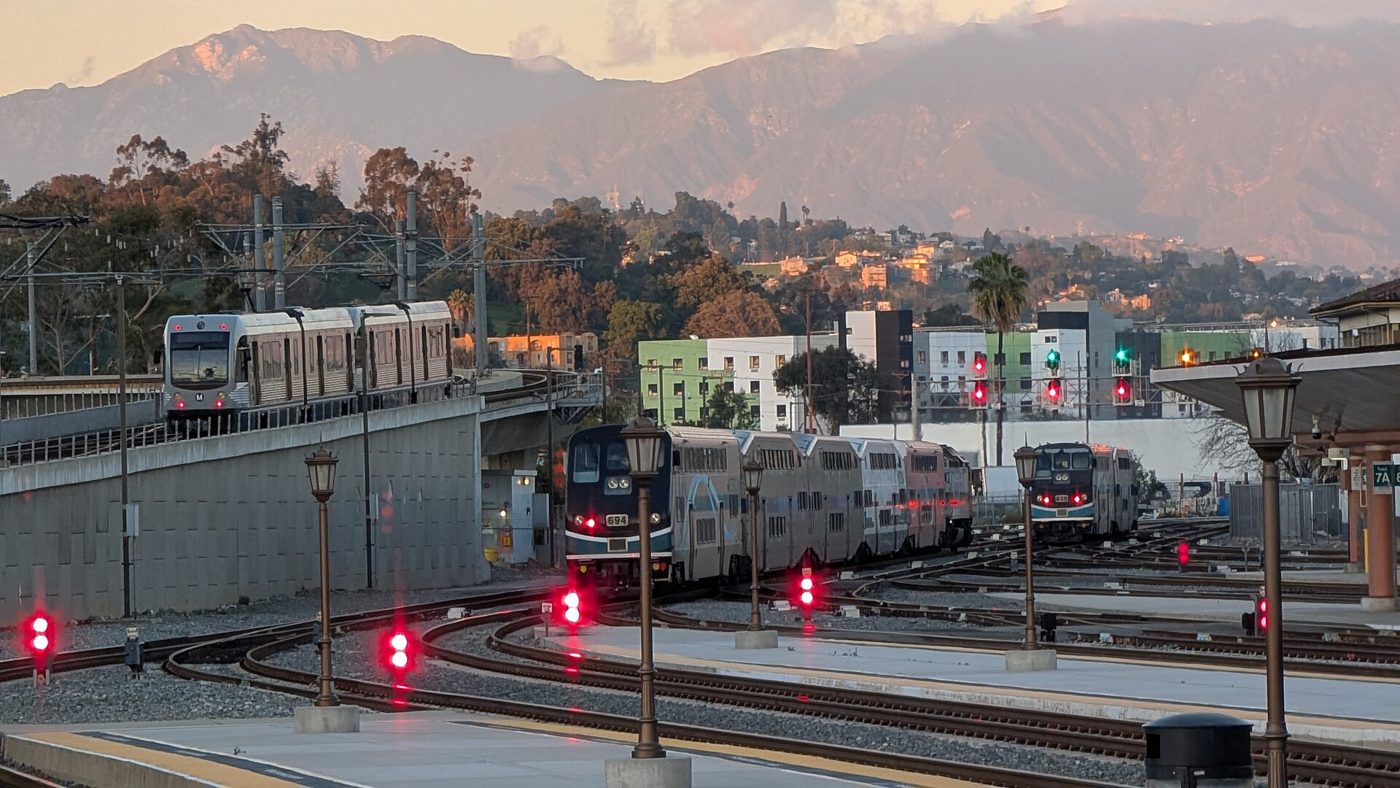
THE RAIL CAME BACK // RANKEDHere's the twist the movie didn't get to: LA built trains again. Some of the new lines run on the old Red Car routes. Ranked by how much ghost you get per ticket.
Metro A Line // downtown ⇄ Long Beach · 1990
Opened in 1990 as the Blue Line, it runs about 22 miles to Long Beach, partly along the old Pacific Electric Long Beach line. The last Red Car route, brought back from the dead about 29 years later.
Metro E Line // downtown ⇄ Santa Monica · 2012/2016
Much of it follows the Pacific Electric Santa Monica Air Line, a route that started as a steam railroad in the 1870s. Passenger service died in 1953, freight hung on till the late 80s, and voters funded buying the corridor back in 1990. Trains reached Culver City in 2012 and the beach in 2016.
Metrolink // the region's commuter rail · 1992
The regional train for the big distances the Red Cars used to cover. Its first trains ran on October 26, 1992, on three lines out of Union Station. After the 1994 Northridge earthquake knocked out freeways, six new stations went up in six weeks. Today it's seven lines and 62 stations across five counties.
Southern California Railway Museum // Perris · since 1956
Founded in 1956 as the Orange Empire Trolley Museum, specifically to save Red Cars while they were being scrapped. It now holds the largest collection of Pacific Electric cars in the world, and restored cars run on weekends. You can sit in an actual Red Car.
The Pacific Electric Building // 6th & Main
Huntington's old headquarters is still standing downtown. No trains anymore, but stand outside and picture the red cars pulling out of the ground floor.
Who rides what
PICK YOUR LINEThe Conspiracy Head
READ: THE 1949 CASE · RIDE: THE A LINERead both sides of the board, then ride the route they "killed" all the way to Long Beach. Report back.
The Film Nerd
WATCH: THE MOVIE · RIDE: TO UNION STATIONRewatch it knowing what's real. Then go to Union Station, which opened in 1939 and is still LA's rail hub.
The Commuter
METROLINK · MONTHLY PASSYour car is a bad apartment with wheels. Let the train drive.
The Beach Ghost
E LINE · END OF THE LINERide the old Air Line route until the tracks run out of land.
The Hands-On Freak
PERRIS · WEEKENDSGo touch a real Red Car at the museum. It's the closest you'll get to 1947.
The Driver
ARROYO SECO PARKWAYDrive the first freeway in the West, slowly. Its curves were built for 1940s speeds, and it will remind you.
> tl;dr.exe
- The Red Cars were real: Pacific Electric, more than 1,000 miles, started in 1901.
- They were a real estate machine. Huntington ran lines to land he owned.
- The movie's villain is fiction, riffing on a real 1949 antitrust case.
- GM & co. were convicted of monopolizing bus sales, and acquitted of the bigger charge.
- The Red Cars weren't NCL's: Southern Pacific owned them until 1953.
- The last Red Car ran April 9, 1961, on the Long Beach line.
- The trains came back: the A Line (1990), Metrolink (1992), the E Line (2012/16).
- Go sit in a real Red Car at the museum in Perris.


THE LEDGER
every hole in this manual, in one place. 12 doors. pick one. we're not responsible for where you end up.
OFFICIAL
- Arroyo Seco Parkway nps.govthe first freeway in the West, per the Park Service
- Metro A Line metro.netride the resurrected Long Beach line
- October 26, 1992 metrolinktrains.comMetrolink's own history page
- Southern California Railway Museum socalrailway.orgsit in a real Red Car. weekends, Perris
- Union Station unionstationla.comLA's rail hub since 1939
RABBIT HOLES
- Pacific Electric Railway pacificelectric.orgthe Pacific Electric Railway Historical Society. photos for days
- Pacific Electric Building pbssocal.orgLost LA: where the Red Car still hides in plain sight
- General Motors streetcar conspiracy en.wikipedia.orga genuinely wild page. both sides, all the footnotes
- Santa Monica Air Line pbssocal.orghow the Air Line became the E Line
- Bradford Snell metroprimaryresources.infoMetro's own library blog. the deepest LA transit rabbit hole there is
READ
- Who Framed Roger Rabbit laist.comLAist: what the movie got right, and what it made up
- April 9, 1961 transportationhistory.orgthe last run, told by transportation historians
Made it to the end? You're a minion now.
New manuals drop every 13th. Get them first, read every one free, or slap a sticker somewhere to show you've been here.
found this printed somewhere? read it, then leave it somewhere weirder. field manuals are supposed to travel.